coffee and graphic novels in the morning
During the month of January as a way to not immediately go to my phone in the morning I decided to read a graphic novel. So upon waking up I would brew myself a coffee and sit down and read whatever I had found in the second hand book shop. It started off with Saga which is very good but, the problem with Saga is that it isn’t finished and I don’t have the funds to start up a graphic novel habit. So when I found Maus and Persepolis in the bookshop I figured I would give them a bash.
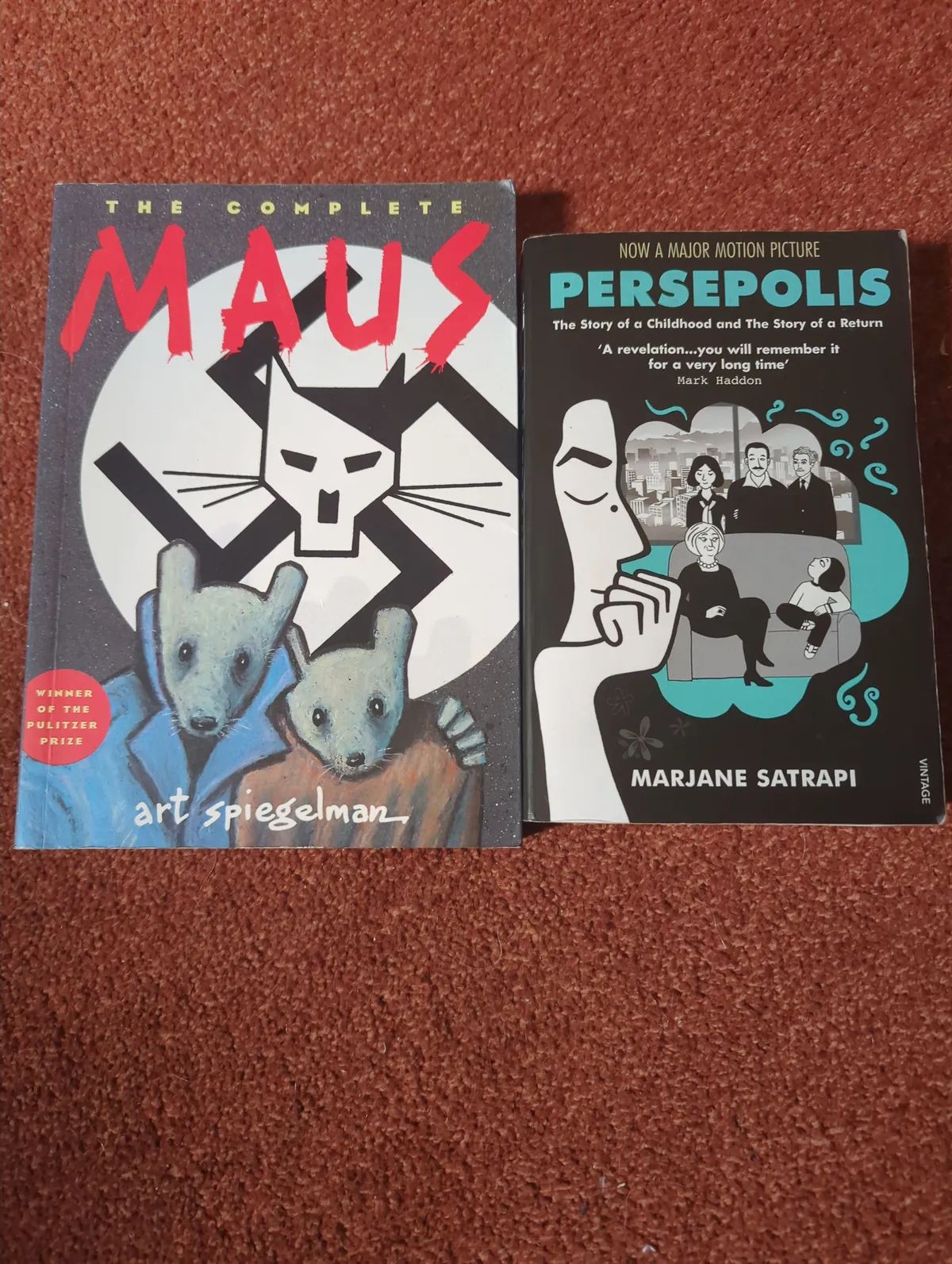
I have heard good things about Maus and it is a subject I am interested in. To quote the band Ignite “You gotta know your history!” Just in case you don’t know what Maus is about let me give you a quick rundown. Its about a the author Art Spiegelman trying to get the story of his father surviving the holocaust. There is also a meta story going on as he is also writing the novel while you read it. Well everything I have heard about Maus was right. This was a great read even though the subject matter is grim as hell for the first thing in the morning. I have seen countless documentaries and videos on the topic as well as read a few books by survivors so I am no stranger to the atrocities committed by the nazis. Yet Maus was able to break new ground on this topic for me and I think the medium lends itself well to a story like this. The characters were nuanced and complex and the artwork simple enough to not detract from the story. I had never fully considered what the lasting effects were to surviving something like that would have. I had a morbid curiosity to know more. Waking up every morning almost excited to find out how the situation worked out. I knew exactly were they would end up but like watching a car crash in slow motion I couldn’t look away. Spiegelmans father is an immensely complex character who despite admitting it was deeply effected by his experiences during the Holocaust. Coming to this realisation as you read you begin to understand the effects of trauma on people which prompted me to consider members of my families historical traumas.
I didn’t go into Persepolis expecting much. I had only read the blurb and needed something to continue my new favourite morning routine. This was probably for the best as I would say that Persepolis holds its own with Maus. Persepolis is about Marjane Satrapi, the author, surviving the 1979 Iranian revolution and how her and her families life changed afterward. They both cover some shared themes of family struggles and dealing with authoritarian regimes. Persepolis does discuss a lot more feminist themes from the middle east which was especially enlightening for me. Once I had settled into the new art style and way of conveying the story I was hooked. Once more I knew where the story ended on a geopolitical sense but again I was morbidly curious to see how this young woman would deal with her entire world changing. The main focus is on her and her family so most side characters don’t get much space to develop. Then again that doesn’t really matter as the reader is along for the ride with Marjane who is more than enough of a character to carry the book. I resonated with this book more than Maus as I also left home at a young age and moved to another country. It is only in hindsight that I can see the problems that arose from that and how I dealt with them. Persepolis highlighted that for me and I did spend some time thinking about my own life after my morning read.
I think the reason these two books had such an affect on me is that the are incredibly relevant right now. I can’t believe that is a sentence I am typing in this day and age. We live in a world once more where given enough chance I feel that certain actors on the global stage would see Maus as a blueprint. They wouldn’t learn the right lessons from the story. Maus is effective because you can see the noose tightening around the Spiegelmans and the extended family. Early on they don’t believe what the are hearing or don’t think it could get any worse. We are currently in those early chapters of the book. Shit is getting real out there folks. I started reading Persepolis a a few weeks after the current Iranian protests and to be honest the book could be the news coming out of the country right now. It could be someone's blog right here. It was very weird but at the same time I felt like I needed to know where this started. I don’t particularly know how to end this on a happy tone. Is there any positives to be take away here? Are we doomed to repeat history ad nauseam? I hope not. I think that having read these books I am armed with knowledge and a better understanding of the world around me. If knowing is half the battle then I'm halfway to being better able to see the mistakes from the past be repeated and maybe I can do something to prevent that. This might be idealistic but I gotta start somewhere.